- Traditional fideuà relies on a powerful homemade fish fumet and a slow, well-caramelised sofrito as its flavour base.
- The choice and toasting of the noodles, along with controlled stirring, are key to achieving the right texture.
- Seafood combinations, from classic monkfish and prawns to cuttlefish-only versions, define each variant’s character.
- Managing heat with a suitable paella pan and burner ensures even cooking, light socarrat and a slightly crisp, lifted surface.

Traditional fideuà is one of those humble fisherman stews that accidentally became a Mediterranean icon. Born on the Valencian coast, especially around Gandia, it looks a lot like a seafood paella – same wide pan, same smoky aromas – but the rice is swapped for short, thick noodles that soak up an incredible amount of flavour. Once you understand how the broth, the sofrito and the control of heat work together, you’ll see why this dish has conquered restaurant menus and home kitchens well beyond Spain.
What makes a great fideuà isn’t just the list of ingredients, but the way every step is handled with care. Fishermen used whatever fish, shellfish and vegetables they had on hand, building a powerful fish stock, slowly cooking a rich sofrito and then toasting the noodles before simmering them in broth. Today you’ll find classic Fideuà de Gandia with monkfish and prawns, versions with just cuttlefish, fully loaded seafood platters, lighter vegetable or poultry adaptations and even Thermomix-friendly approaches – but all keep that essential balance between intense seafood flavour and perfectly cooked pasta.
What exactly is traditional fideuà?
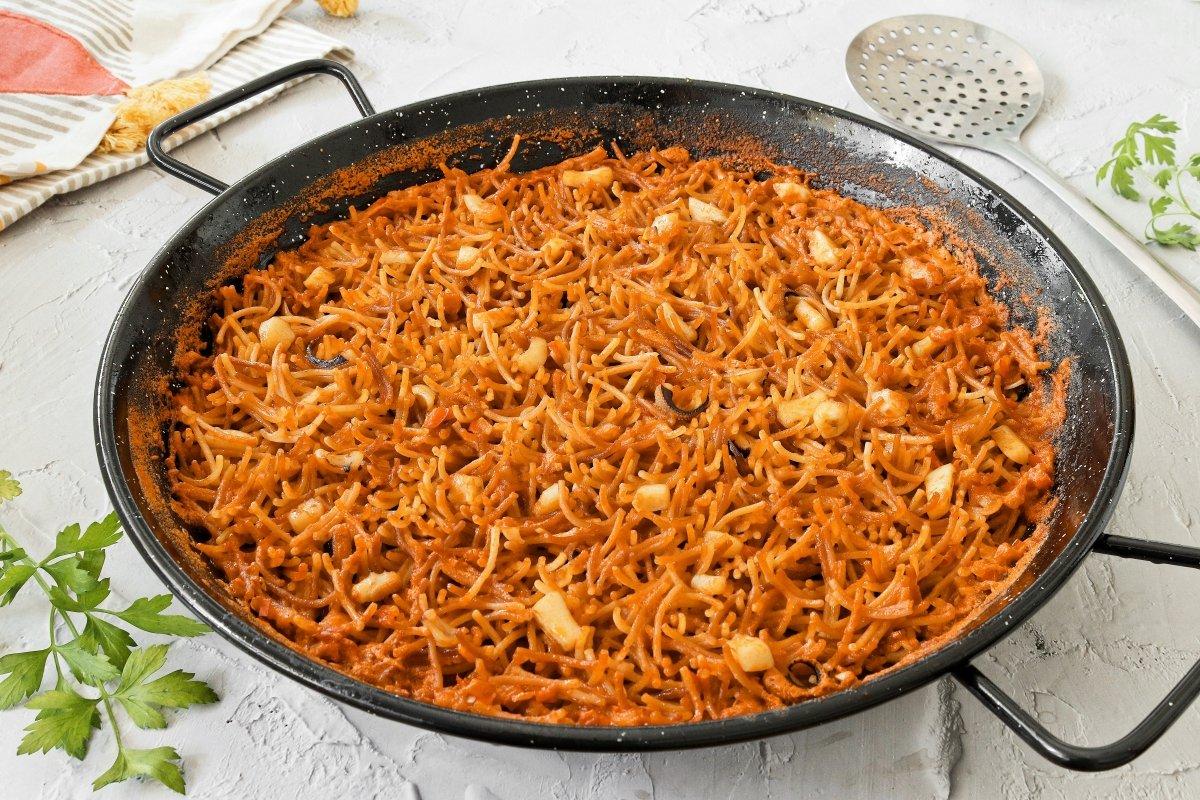
Fideuà is a Valencian noodle dish cooked in a paella pan, using pasta instead of rice and built on a strong fish fumet. The noodles are usually short and fairly thick, often with a hollow centre that allows them to drink up the broth from the inside. The result is a surface of lightly toasted, sometimes even upright noodles, and a bottom layer that is juicy, tasty and slightly caramelised.
In terms of structure, fideuà has three non‑negotiable pillars: a good fumet, a slow sofrito and precise heat management. The stock (made with fish bones, heads, prawn shells and vegetables) is the soul of the dish; the sofrito of onion, garlic, pepper and tomato brings sweetness and depth; the careful handling of the flame (first strong, then gentle, finishing with a burst of high heat or a short bake in the oven) defines the final texture of the noodles and the sought‑after light crust on the base.
Although we tend to talk about fideuà as if it were a single recipe, in practice there are many families of the dish. You’ve got pure seafood versions with prawns, langoustines, monkfish, cuttlefish, squid and mussels; simpler ones just with cuttlefish or squid; mixed versions with chicken and rabbit; vegetable or vegan adaptations and even gluten‑free interpretations if you use suitable pasta. The classic benchmark, however, is the Fideuà de Gandia: noodles with monkfish (or similar white fish) and prawns, plus an intense marine broth.
In coastal homes, fideuà often sits in the same mental slot as paella: a dish to share, to put in the middle of the table and eat straight from the pan. It’s usually accompanied by a generous spoonful of alioli (garlic mayonnaise) and a glass of well‑chilled white wine. Letting the pan rest a few minutes before serving is almost sacred, so the noodles can finish absorbing the broth and the flavours have time to settle.
Beyond family meals, fideuà has gained such importance that Gandia holds an international competition dedicated to it. Chefs from different countries compete to nail the most balanced version in terms of flavour, texture and presentation, always respecting that fisherman spirit: simple ingredients, but cooked with precision and respect for the product.
Origin and legend of Fideuà de Gandia
The most widely told story about fideuà places its birth on a boat sailing out of the port of Gandia in the early 20th century. A ship’s cook, often named as Gabriel Rodríguez Pastor in local lore, used to prepare arroz a banda (a rice cooked in fish stock) for the crew. The problem was the captain loved that rice so much he would eat more than his share, leaving his sailors half hungry.
To solve this situation, the cook decided to play a little culinary trick. When he realised he was running short of rice – or, in another version, deliberately – he replaced the grains with the only alternative he had on board: dried noodles. His hope was that the captain would find this less appealing and leave more for the rest of the crew. The result, however, was so delicious that the new noodle dish spread quickly among fishermen and dockside taverns.
Another version of the legend doesn’t focus on one named cook, but on the collective creativity of fishing families in the Grao (port area) of Gandia. Faced with shortages of rice or wanting to vary the daily menu, they started making a version of arroz a banda using fideos instead, discovering that the pasta absorbed the fish broth beautifully and gave the stew a different, but equally comforting, personality.
Whatever narrative you prefer, what’s clear is that fideuà grew out of seafaring life, scarcity and practicality. Fishermen used heads and bones from the day’s catch to create a powerful broth, then simmered it with whatever cuts of fish or shellfish they could spare and a handful of pantry‑stable pasta. Over time, restaurants in Gandia began to refine the preparation, adjusting the noodle size, standardising the broth and polishing the presentation.
That long journey from improvised boat meal to gastronomic symbol is why Fideuà de Gandia carries a very specific identity today. When people talk about the “traditional” version, they’re often referring, knowingly or not, to this Gandia style: noodles of a set thickness, monkfish or similar white fish, prawns or langoustines, a well‑made fumet and a paella pan over live flame. It’s no coincidence the city holds an international contest where restaurants like Chef Amadeo – multi‑award winners – have become benchmarks.
The soul of the dish: fumet and sofrito
If there is one thing all serious fideuà cooks agree on, it’s that without a good fumet there is no good fideuà. The fish stock doesn’t have to be complicated, but it does need love: fish bones and heads (monkfish, hake or rock fish work great), prawn or langoustine shells, a piece of leek, onion, carrot, celery and tomato. Everything is gently sautéed first to concentrate flavours, then simmered with water for around 30-45 minutes.
The goal is a broth that tastes clearly of the sea, with depth but without being muddy or excessively salty. Once cooked, it’s best to let it rest a bit to round off the flavours, then strain it and keep it hot, because adding cold broth to the noodles would break the boiling rhythm and negatively affect texture. Many home cooks opt for high‑quality shop‑bought fish stock when pressed for time, but whenever possible, homemade fumet is the ace up your sleeve.
Right next to the fumet in importance is the sofrito, that slow‑cooked base of vegetables that builds sweetness and complexity. Typical ingredients are finely chopped onion, garlic and red and/or green bell pepper, slowly sautéed in olive oil until very soft, almost melting. A touch of sweet paprika is added briefly – carefully so it doesn’t burn – followed by grated, crushed or tinned tomato that’s cooked down until it loses its water and becomes a thick, caramelised paste.
Some cooks enrich the sofrito with a simple majado (pounded paste) of garlic, parsley and olive oil. This little extra brings freshness and a herbal note that lifts the final dish. In more traditional or rustic fideuàs the onion and garlic are chopped, not grated or blended, so they remain visible and separate from the noodles once cooked, adding pleasant bites of sweetness and flavour.
Taking your time with the sofrito is one of the big secrets that separate a decent fideuà from a memorable one. Rushing this step at high heat yields a dull, watery base that can’t properly support the noodles and seafood. Working over medium‑low heat, stirring often and allowing the vegetables to slowly brown and melt ensures every grain of flavour ends up coating the pasta.
Choosing and preparing the noodles
The type of noodle you choose will largely define the personality of your fideuà. The most traditional choice is a short, fairly thick noodle (often labelled nº3 or nº4) made from durum wheat semolina, sometimes with a hollow core. This shape provides enough body to withstand toasting and a relatively long simmer without falling apart, while the interior cavity fills with broth, boosting each bite.
However, there are also very popular versions using fine noodles or even angel hair. These thinner pastas need less broth and a shorter cooking time, and can create that spectacular “spiky” effect where the ends stand up and crisp in the oven. They’re easier to manage on standard home stovetops and are often recommended for beginners who don’t have powerful gas burners.
Before adding the stock, the noodles are almost always toasted or at least well sautéed with the sofrito. This “bronzing” step is similar to how you start a good risotto or many rice dishes: the dry pasta is stirred in hot oil so its surface roasts slightly. This brings a toasted wheat aroma, helps the noodles keep their structure and allows them to better absorb the flavoured fat and sofrito.
The key is to give them colour without burning them. If you’re using very thin noodles, they darken quickly and can go from beautifully golden to bitter in seconds, so you need to keep them moving. With thicker fideos you have a bit more leeway, but even then it’s wise to stir continuously for a minute or two over medium‑high heat, watching the base of the pan so nothing catches.
Some recipes go one step further and pre‑fry the noodles on their own in neutral oil, then drain and reserve them. Later, they’re added back to the pan with the sofrito and seafood before the broth goes in. This technique, often used when working with fine noodles, gives an especially crisp, elevated texture to the finished dish and makes it easier to control browning.
Classic proteins and key variations
A traditional seafood fideuà usually combines white fish, cephalopods and shellfish. Monkfish (or dogfish / similar firm white fish) is a favourite because it holds together well and has great flavour; cuttlefish and squid contribute that characteristic sea aroma and a slightly chewy texture; prawns, langoustines, cigalas (Norway lobsters) and mussels add sweetness and a visually appealing finish.
One particularly beloved variant is cuttlefish fideuà, which can be kept almost monochrome in terms of protein. Here, cuttlefish plays the starring role, sometimes supported only by a few prawns for colour. A very specific touch in Valencia is to use a tiny amount of the sepia’s internal sac, known locally as melsa, mixed with the cuttlefish pieces before sautéing. Used sparingly, this intensifies the marine flavour; if you overdo it, though, it can turn the dish slightly bitter.
Beyond seafood, fideuà also admits poultry or mixed combinations without losing its essence. Chicken and rabbit, the classic duo from paella valenciana, can be sautéed first to brown them, then set aside and reintroduced with the noodles and broth. Vegetable or even vegan versions swap the fish fumet for a rich vegetable stock and rely on mushrooms, seasonal vegetables and extra paprika or saffron to provide depth.
The cut and handling of the proteins is as important as their choice. Prawns and langoustines are usually quickly seared whole with shell in the paella, just until they change colour, and then reserved to finish cooking on top of the noodles. Monkfish and other fish fillets are cut into bite‑size chunks, seared briefly and also set aside. Cuttlefish and squid are sautéed until tender, which can take a few more minutes, and then reintroduced later so they don’t toughen up with the long simmer.
In more elaborate restaurant versions, the seafood is carefully arranged on the surface just before the last minutes of cooking or before moving the pan to the oven. This way each portion looks balanced – a piece of fish here, a prawn there, a mussel here – and the diners feel every plate is equally generous, a small but important detail in dishes designed to be shared.
Step‑by‑step: how a traditional seafood fideuà comes together
Although every cook has their own twists, the structure of a classic maritime fideuà follows a fairly consistent sequence. First, the seafood is seared: prawns or langoustines go into hot olive oil in the paella, are browned lightly and removed; fish pieces like monkfish are seared in the same oil until they take on colour and also reserved; cuttlefish or squid are sautéed until tender and then taken out.
With those flavours already in the pan, the sofrito is built in the same fat. Finely chopped garlic and onion are cooked gently until transparent and lightly golden, then diced bell pepper is added and slowly poached until soft. At that point a spoon of sweet paprika is stirred in quickly, followed almost immediately by grated or crushed tomato, which is left to cook down thoroughly. A majado of garlic, parsley and olive oil may be incorporated here to boost freshness and aroma.
Once the sofrito is ready, the noodles are added and toasted. Thicker fideos are stirred for several minutes over medium‑high heat until they take on a light golden tone; fine noodles may need just a minute of constant movement. The idea is to coat every strand with the flavoured oil and vegetable mixture, starting the browning that will later give crunch at the top and structure inside.
At this point the hot fumet is poured in, usually at a ratio between 3.5 and 4 parts stock to 1 part noodle by volume. For example, around 1.8 litres of fumet for 500 g of thick noodles. The heat is raised to bring everything to a strong boil for the first 4-5 minutes, allowing the pasta to start hydrating and the broth to reduce. Then the flame is lowered to medium‑low for another 8-12 minutes, depending on noodle thickness and the power of the heat source.
Unlike paella, where the rice is left undisturbed once spread in the pan, fideuà does require some controlled stirring. Especially in the early minutes after adding the broth, the noodles tend to stick to the bottom of the pan and form clumps if you ignore them. Gentle, periodic movements with a spatula help release any bits that might be catching, distribute the noodles evenly and ensure every part of the pan cooks at the same rate.
Three or four minutes before the end of cooking, the reserved fish and shellfish are placed back on top. Prawns and langoustines are arranged harmoniously across the surface, pieces of monkfish or other fish are nestled between, and any pre‑cooked mussels or other shellfish are tucked in. This final simmer allows the proteins to finish cooking in the aromatic steam without drying out.
To finish, many cooks give the fideuà a final hit of strong heat or a quick pass through a hot oven. In house kitchens, a common technique is to preheat the oven to around 200 ºC (or higher if possible), move the paella pan inside once almost all the liquid has been absorbed and bake it for 3-5 minutes. This encourages some noodles to stand upright and creates a lightly toasted top while forming a subtle socarrat at the base.
Once out of the oven or off the heat, the pan is left to rest a few minutes before serving. This pause allows the remaining broth to settle, the noodles to finish hydrating with residual heat and the flavours to harmonise. Tradition calls for bringing the entire paella pan to the table and letting diners serve themselves – or even eat straight from the pan, each from their own side.
The role of fire and equipment
Fire control is absolutely critical in fideuà, perhaps even more than in rice dishes. The noodles are lighter, tend to move more and can stick or overcook quickly if the heat is uneven. That’s why many cooks prefer to prepare fideuà outdoors, over gas burners specifically designed for paella pans, with two independent rings to adapt the flame to the diameter of the pan and each phase of cooking.
Modern butane gas burners tailored for paelleras offer several advantages for this dish. Instant ignition and finely adjustable flame make it easy to jump from the strong heat needed to sear seafood and start the boil to the gentle simmer required for controlled cooking. A robust design with wind protection and safety systems like thermocouples helps maintain a constant flame, something especially important when you’re cooking outside.
In many home kitchens, though, fideuà is still made on standard stovetops. In these cases, it’s crucial to use a paella pan whose size matches the heat source as closely as possible; too large and you’ll get cold zones that leave noodles undercooked, too small and the dish will be too deep, encouraging uneven cooking. For thin noodles, this is less problematic; with thicker ones, controlling depth and heat distribution becomes more important.
Regardless of the equipment, the cook has to adapt to three main stages of heat. First, high heat for searing seafood and building the sofrito; second, a strong boil right after adding the broth; and third, a longer period of moderate heat while the noodles absorb liquid. At the very end you can either increase the flame to create that slight base crust or move the pan under intense oven heat to crisp the surface.
Wind, pan material and even the type of gas used can alter how the dish behaves. This is why experienced fideuà cooks are constantly watching the surface: if the broth evaporates too quickly, they may add a splash more fumet; if parts of the pan look drier than others, they gently rotate or shift the pan. Rather than blindly following a timer, they let sight, smell and taste dictate when the dish is at its sweet spot.
Fideuà with cuttlefish: focusing on one star ingredient
Among the many variations that have grown from the traditional recipe, cuttlefish fideuà stands out as a simpler but deeply flavourful option. Here, the main protein is a small sepia, fresh or frozen, cleaned and cut into even pieces. It can be accompanied by a few prawns for extra colour and sweetness, but the idea is to showcase the cuttlefish’s texture and intense marine character.
The preparation begins with a slightly different first step: frying the noodles on their own. A small amount of neutral oil (such as sunflower) is heated in the paella, fine noodles are added and cooked over medium heat while stirring constantly until they are evenly golden. Once toasted, they’re removed and reserved while the rest of the dish is built.
If using fresh cuttlefish, some Valencian cooks add a quarter teaspoon of the melsa, that dark sac inside the sepia. Mixed into the cuttlefish pieces before searing, it amplifies the marine flavour noticeably. Because it can turn bitter if used in excess, the amount must be minimal, just enough to add a background note rather than dominate.
The cuttlefish is then quickly sautéed over strong heat with a pinch of salt until it changes colour and begins to release its juices. It’s removed to a plate and a sofrito is made in the same pan: garlic, onion and red pepper, slowly reduced in olive oil; then sweet paprika and prepared tomato sauce are added. When everything is well integrated, the cuttlefish goes back into the pan, followed by the pre‑fried noodles and finally the hot fish fumet.
Cooking times are slightly shorter due to the fine noodles. After a brief strong boil, the heat is lowered so the pasta can absorb the broth while remaining al dente and, if you like, the paella can be left to rest off the heat for about ten minutes so the noodles “stand up” and the surface dries a little. A generous spoonful of alioli on the side makes this version particularly addictive.
Tips, tricks and small secrets for a great fideuà
Over time, cooks have collected a whole series of small tricks that make a big difference to the final result. One of the most repeated is to invest as much patience as possible in the sofrito; it’s better to take a bit longer over low heat than to try to rush and end up with harsh flavours or half‑cooked vegetables. A sofrito that smells sweet and deep is the best sign you’re on the right track.
Another recurring tip is to carefully toast the noodles without crossing the line into burning. Think “summer tan”, not full char. A gentle bronze colour brings that pleasant crunch to the surface and a subtle nutty taste; blackened noodles, on the other hand, will inject bitterness into the whole pan. Staying close to the stove and stirring constantly during this phase is non‑negotiable.
The choice of broth, whether homemade or bought, should be guided by flavour first and price second. If you have time, doing your own fumet with rock fish, crab, prawn heads and a handful of vegetables gives you complete control over intensity and salt. If you use shop stock, pick the highest quality you can and taste it beforehand so you can adjust the seasoning of the sofrito accordingly.
As for whether to stir during cooking, the sweet spot is “enough, but not obsessively”. In the first few minutes after adding the broth, occasional gentle stirring is useful to prevent sticking and help distribute heat. Once the noodles are more hydrated and the liquid level has dropped, it’s good to limit movement so the surface can settle and crisp a little, and the base can form a slight socarrat.
Finally, serving with alioli is almost a must in many households and restaurants. You can go purist and make the classic garlic‑and‑oil emulsion without egg, or opt for a quicker, more forgiving version that resembles mayonnaise and may even include small twists like chopped walnuts or a dash of lemon. Prepared in advance and chilled, it brings a creamy, garlicky contrast that pairs beautifully with the sweetness of seafood and the smokiness of the noodles.
Traditional seafood fideuà, whether in its Gandia form, loaded with mixed shellfish, or in focused versions like cuttlefish‑only, shows how a handful of basic ingredients can turn into something truly special when treated with patience and care. A powerful fumet, a slow and loving sofrito, well‑chosen noodles, control of the flame and that final rest in the pan are the real “secrets” behind a dish that, once you master it, will gather people around your table again and again.